


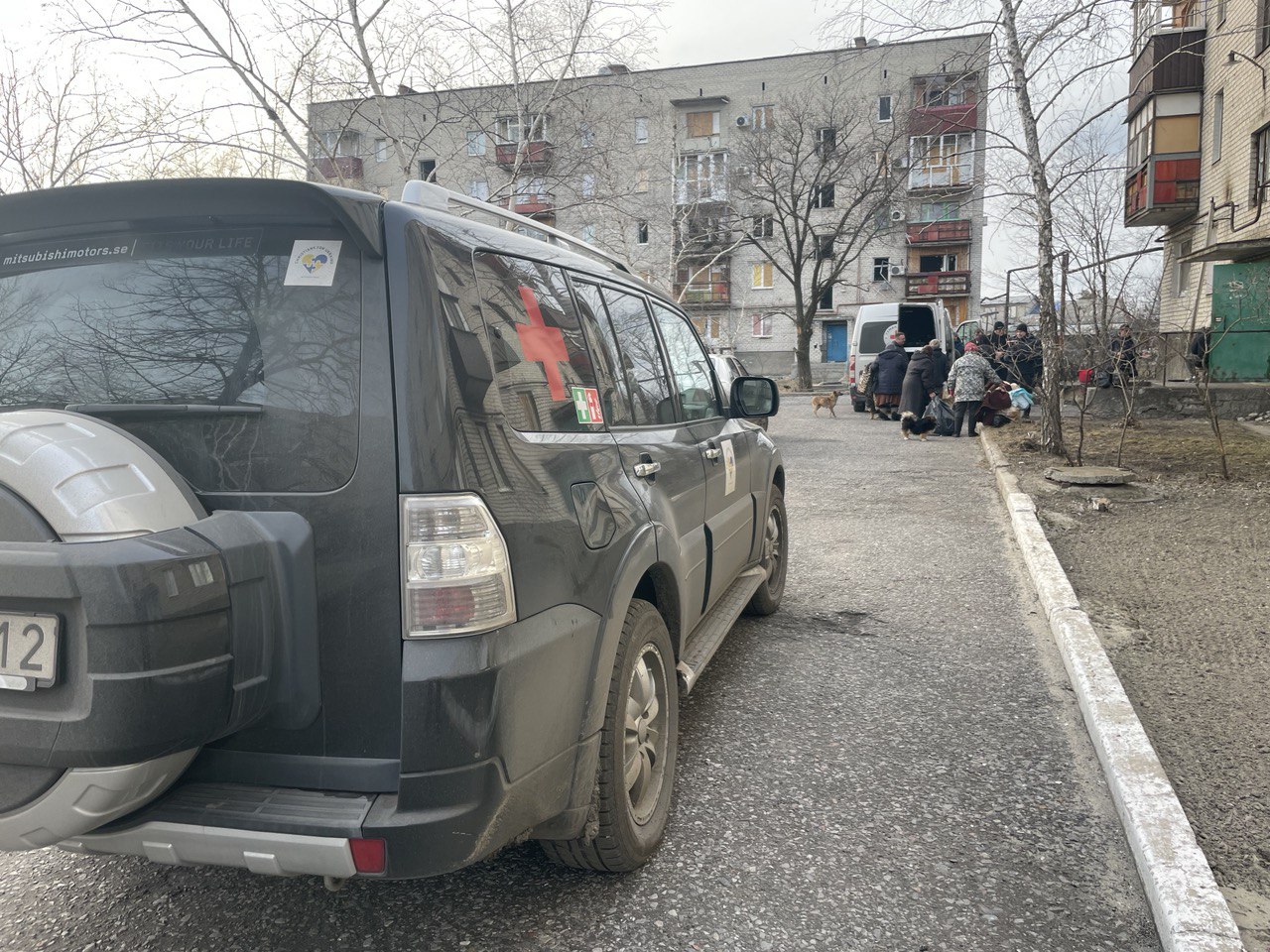
In early March, we traveled as a four-man team to the war-torn Kharkiv and Donetsk regions of eastern Ukraine. After an early morning flight to Warsaw, two full days in a car awaited us to get to our base in Poltava. We have purchased a sturdy, older Mitsubishi Pajero Jeep in good condition for our many and long trips in the country. The last thing you want is a broken front end in one of the many holes along the roads. The first stop was in Lublin, Poland. There we have our transshipment warehouse, which is also the first point in our network of 5 warehouses. Here we can receive large loads from Europe and the US and send it on. We have just purchased a forklift for our Ukrainian central warehouse in Khmelnytski which further streamlines transshipments for onward transportation to our regional bases, where our ten buses distribute the aid to people in need in their local areas.
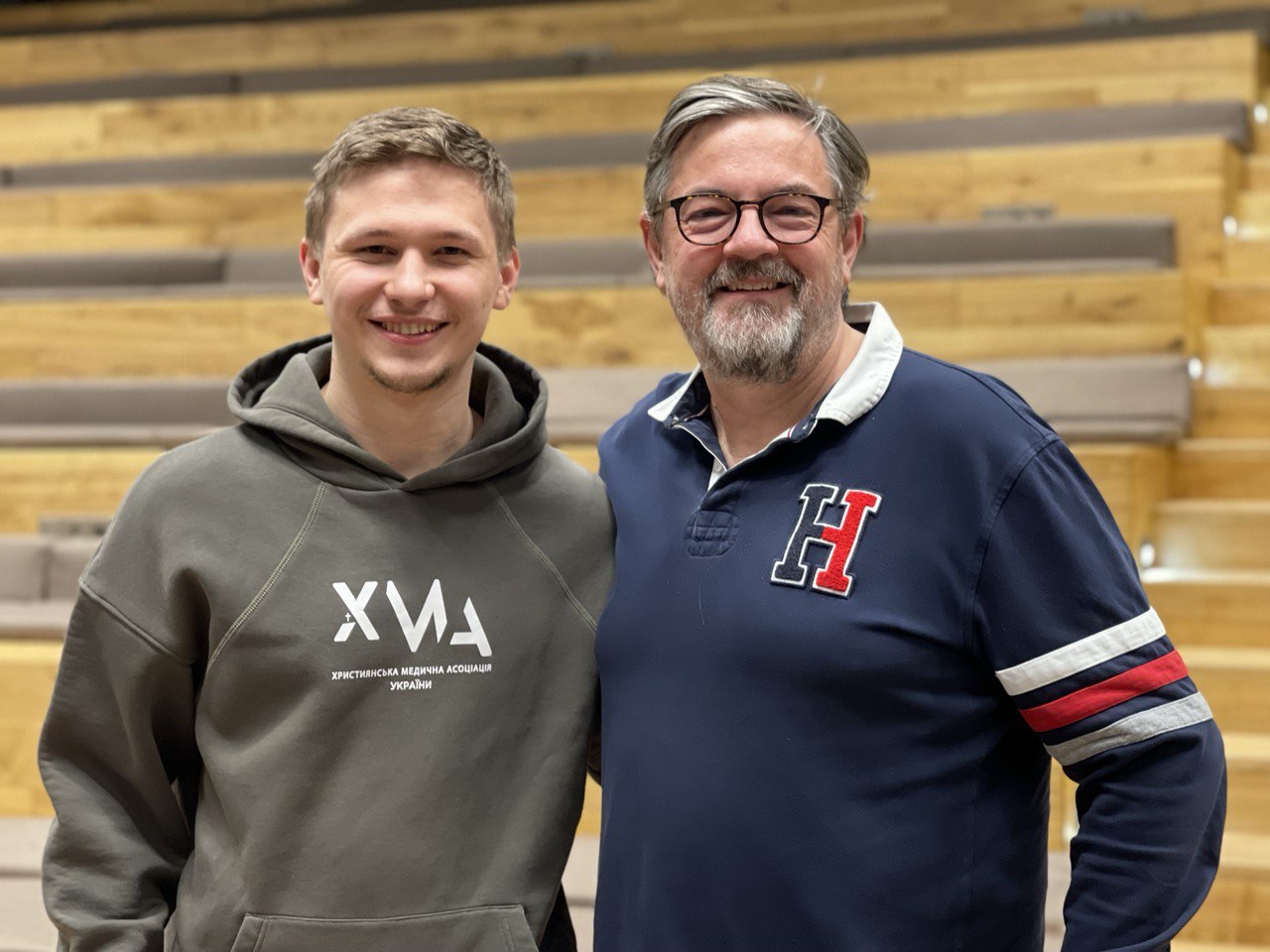
The medicines, however, go to our partner organization, the Christian Medical Association of Ukraine’s warehouse in Lviv. They distribute the aid to 350 hospitals and 362 churches. “400 tons is a lot of medicine when you consider how little a box of painkillers weighs,” Dr Rudy, who leads the work, told us. Word of Life has helped them fly Ukrainian doctors to university hospitals in the US, including Harvard, to train them in war surgery. Ukrainian hospitals are flooded with wounded people. Specialized care saves lives and relieves many serious injuries.
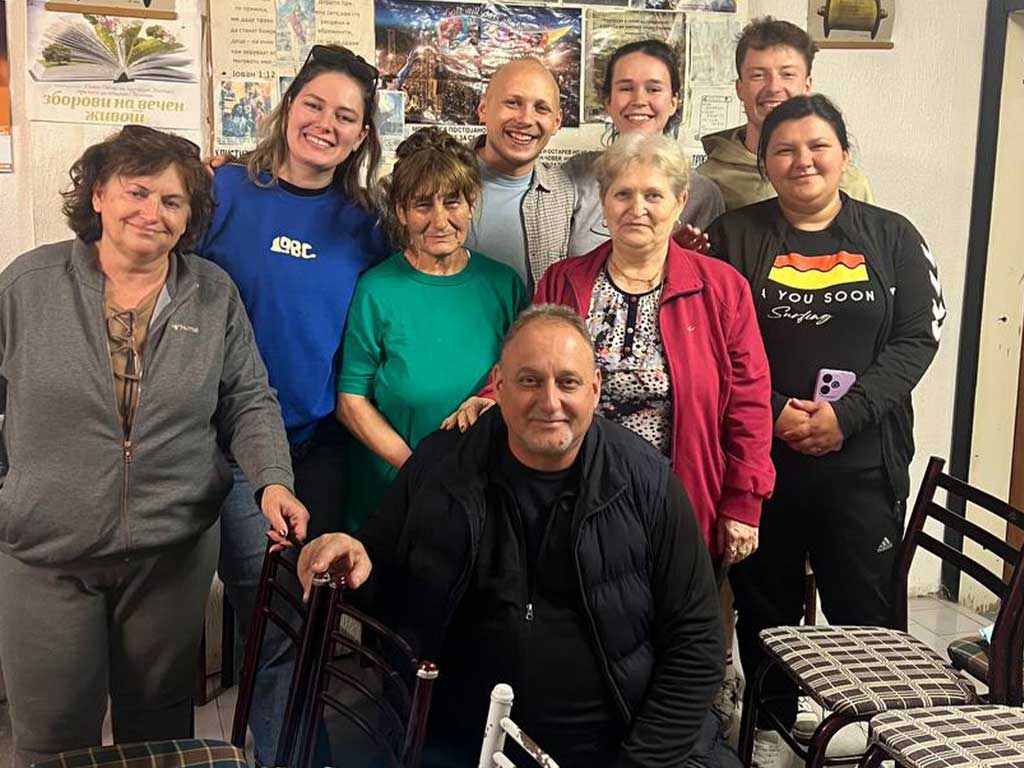
Once in Poltava, a huge program awaited. Early rise the next morning and departure for the country’s second largest city, Charkiv. Pastor Vladimir from Poltava took his team in one of our buses. In Kharkiv, Russian troops reached the suburbs. High-rise buildings show severe damage from both artillery shelling and aerial bombing. The front lines are just a few miles away. Some of the small communities around are totally destroyed. Dolls and toys lie among the ruins and broken glass. The visit to Kharkiv ended with a sermon in a crowded room in the church we started in the early 90s. After the service, we distributed food bags to grateful people. A food bag is more than material help. It is a point of contact, a conversation, an intercession, new hope that can become budding faith.
The next day was a demanding journey. We started before the hotel breakfast was served, but got some French bread and an apple. At 0900 we stopped at a gas station and were told by the pastor, “Buy something for lunch. Now we won’t get food for 10 hours, in the areas we are traveling in there is nothing to get”.
The first stop was Izium, first taken by separatists from Lugansk during the war before Russian troops arrived. In September last year, the Ukrainian military recaptured the entire region. We met our contact next to an air-bombed high-rise building where 40 people had died in the basement where they had taken shelter. Among the dead was a woman with a child under each arm. We dropped off bags of food and then traveled on to the ghost town of Lyman.
That journey of a few hours was really shaking. Tank tracks in the asphalt generated vibrations in the car. Everywhere there were signs of war and devastation. Burnt-out tanks, trucks and civilian vehicles were scattered along the roads. Patches of forest were blown apart and partially burnt. Every road junction was surrounded by trench systems.
The villages were the worst to see. Terrible devastation. Hardly a whole house left. In one village we found a family to give food to. Everywhere you stop there are abandoned dogs waiting to be fed. We have to be careful not to go beyond the edges of the asphalt. Ukraine is the most mined country in the world.
Lyman was indeed a ghost town, hardly a single person out. Much of the town’s buildings lie in ruins. In many of the remaining houses, the broken windows were covered with plywood or plastic. Here and there, curved chimneys could be seen protruding from the ground in basements, so at least some people had heat in their shelters.
We arrived at our address, but it was completely deserted. An elderly woman looked out. Soon a crowd was gathered to receive their food parcels. We didn’t have to put on our helmets and safety vests, which was nice. We were about 2 miles from the front line, which in itself is within artillery range. In the distance we could hear a few cries. The people who had endured the occupation for a few months were very badly affected. They were mostly elderly, as the younger ones fled the war early. The gratitude is enormous. Not just for the food, but for the care. They are not forgotten, and that is warming!
After about an hour of food distribution, we heard the bangs coming closer, a little more unpleasant this time. We quickly packed up and started the long journey towards Poltava. A flat tire in the dark came at a very bad time and threatened to prevent us from arriving before the curfew came into force.
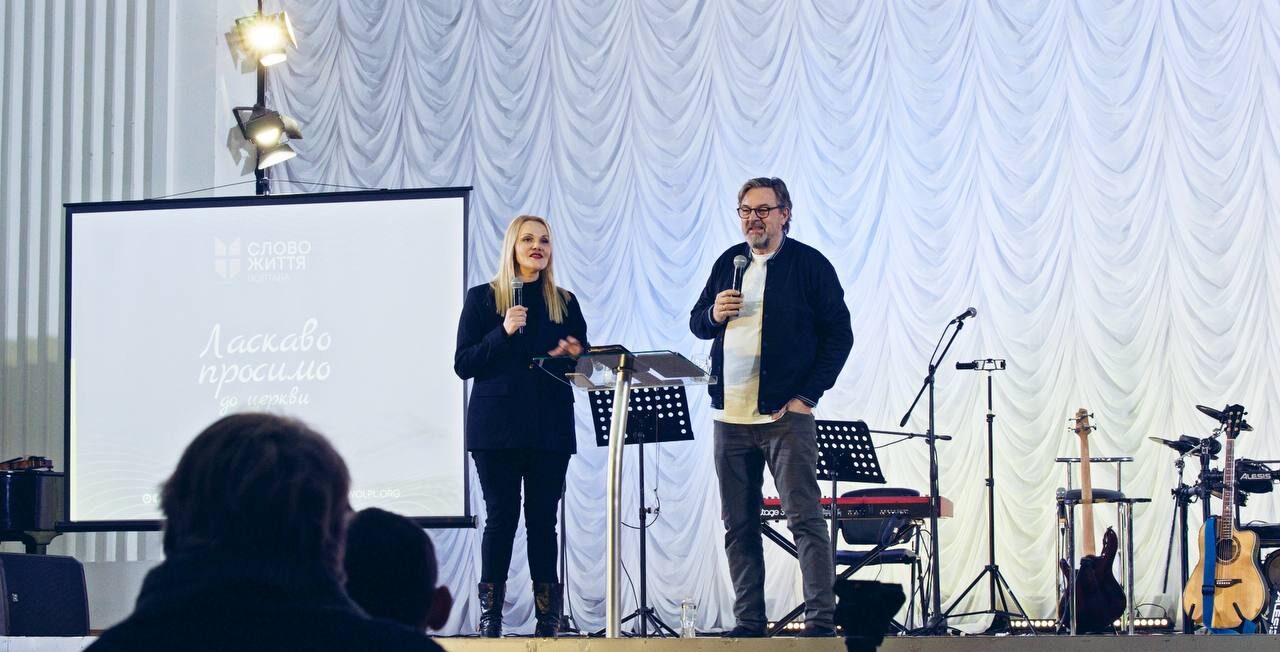
Sunday and time for two services in the Word of Life, Poltava. A little special for me who had an ancestor named Casten Feif during the battle of Poltava. Not Sweden’s proudest moment, but Feif survived and fled together with Charles XII to Bender, which is in present-day Moldova.
It was really wonderful to preach about how the Lord helps us in our suffering. It is so important to strengthen Christians. The churches are the light in these areas. The churches are also the most effective in getting the aid to the needy. 70-80% is distributed through the churches and they need every encouragement.
On the two-day journey back to Poland, I thank the Lord for the network of churches we have in Ukraine. It has been key in helping so many during the various stages of the war. Help with refugee shelters, food, clothes, medicines, generators, stoves, buses and much more would have been impossible without these churches. And they are the ones who light up the darkness with the Gospel of hope.