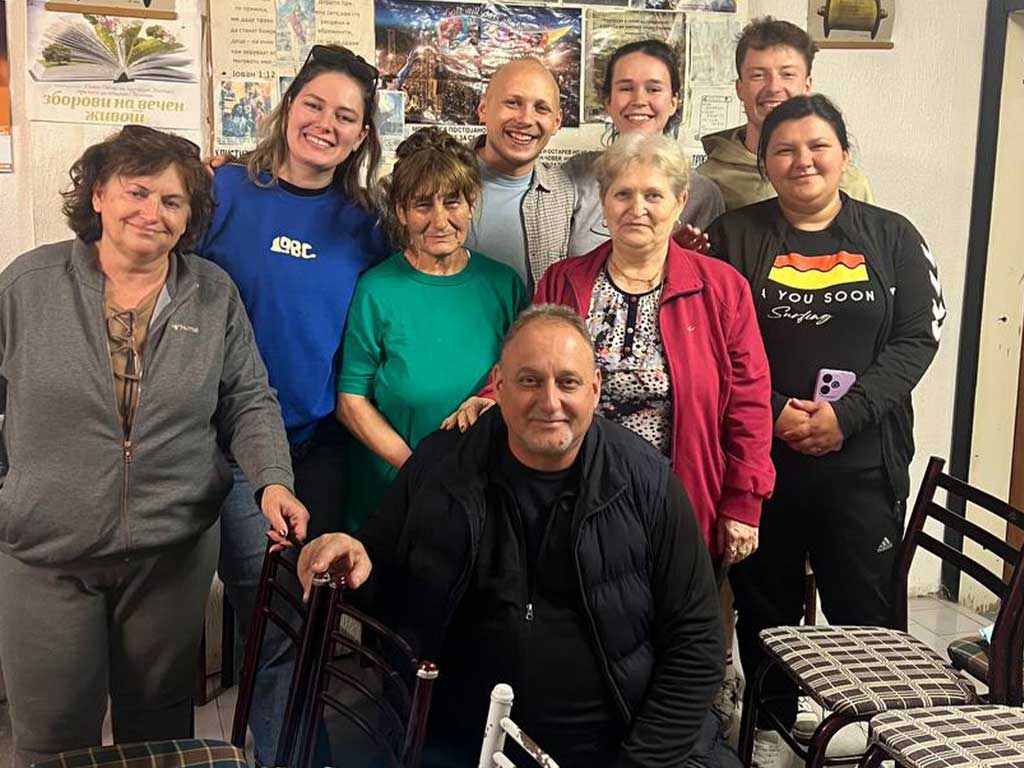



A two-week intensive tour throughout Ukraine has just concluded. Together with a team, we visited churches within the Word of Life network across the entire country.
It’s quite a strange feeling—one you, unfortunately, get used to a little too quickly—to travel through a country at war. I’ve seen it before: a new kind of normal sets in. Life must go on, even under tragic and difficult circumstances. These are circumstances we as Swedes have been spared from for over 200 years.
The two-year anniversary of the full-scale Russian invasion occurred during our visit there. There was some concern that missile attacks would intensify on that specific day to further weaken the people’s resolve and determination not to give up. However, the day turned out to be relatively normal. Most people now ignore the frequent air raid sirens. The general attitude is that if you hear a detonation, you throw yourself to the floor or lie down in a bathtub, in case more missiles or drones are on the way.

The team together with their interpreter
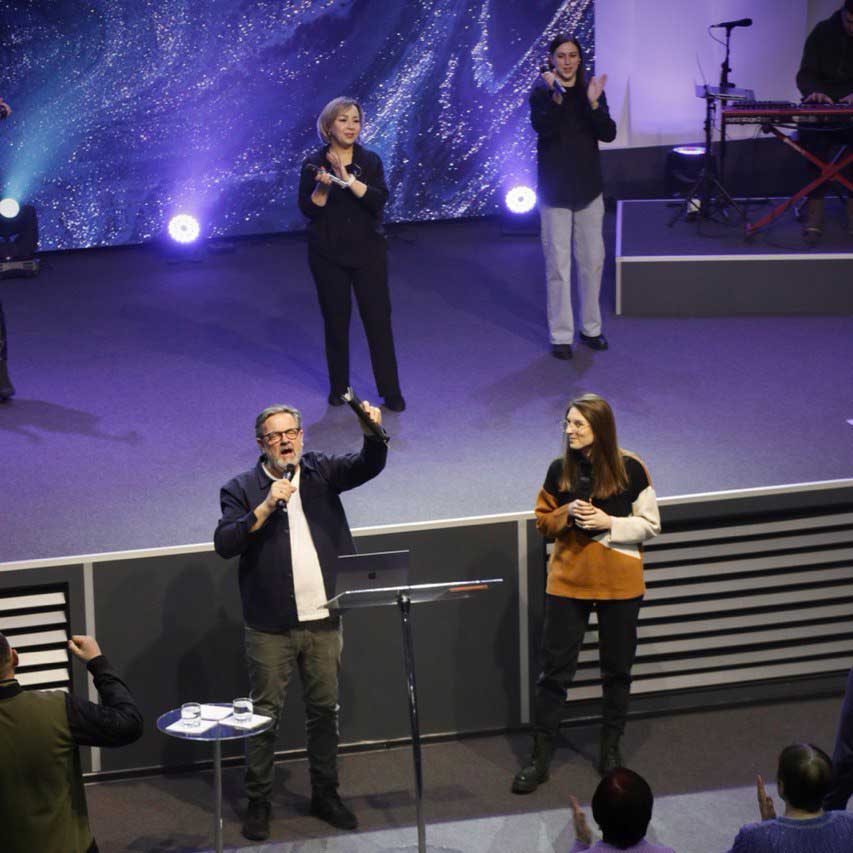
Christian teaching at the Bible school in Pavlovgrad.
During the early months of the war, the people were in a kind of shock, but when they managed to repel the attacks around Kyiv and even recaptured a large area around Kharkiv, a sense of optimism emerged. That optimism has now weakened again as they see that external support—especially from the USA—is faltering. That’s why visits like ours are especially appreciated.
Our efforts at the beginning of the war were primarily humanitarian. The congregations could not gather. Pastors’ families had fled abroad, while the pastors themselves were forced to stay behind due to mobilization requirements. These efforts have meant an incredible amount and have helped the churches reach many vulnerable people.
Church life began to blossom again, now with many new faces in attendance. We therefore decided to start Bible schools in order to educate and train the new church members, as well as the young people who have now reached a good age for Bible school. Many of those who fled were leaders and active in the churches. So, there are gaps to fill.
We chose not to take the easy path but are running four Bible schools simultaneously, one in each corner of the country. Altogether, we have 415 students, some of whom are studying online. In addition, a Bible school with Ukrainian refugees has joined in Valencia, Spain. Here I just have to express extra joy that we have so many capable people to send both from Livets Ord in Uppsala and from churches within the Livets Ord Family in Europe. It is fantastic that we as congregations can come together and make important contributions. Once again, we see how the network idea is the key both within Ukraine and from outside.
The students at the Bible schools are motivated. The pastors are very pleased with the influx of life the schools bring, and through this, we have the opportunity to participate in making disciples—leading young believers into a deeper fellowship with the Lord, equipping and training them to become servants in the congregations and workers for the harvest. The harvest increasingly calls for more workers, and therefore it is absolutely essential to train new laborers.
Another goal we set for this year was to start new congregations. To gather the harvest, you need barns to store it. Furthermore, the congregation is also the tool in the harvest work. Currently, we support six new congregations. Some of these are located in war-affected areas such as Kherson, Mykolaiv, and Izium.
Pastor Valentin in Kherson is impressive. A small, slender father of four who, during the occupation of his hometown, fled to Spain with his family. On November 10th, the Lord spoke to him to return. The very next day, the city—located by the Dnipro River, which forms the front line—was liberated. This means the city experiences artillery fire daily. When I visited the church’s area, where they also run a shelter for the homeless, I saw traces of rockets that had hit. While we were there, we were asked to park our car in the garage to protect it from possible rockets. Three days later, a rocket struck right outside the garage door and set the garage on fire. In the midst of all this, Valentin continues his work unwaveringly. A hero in my eyes.
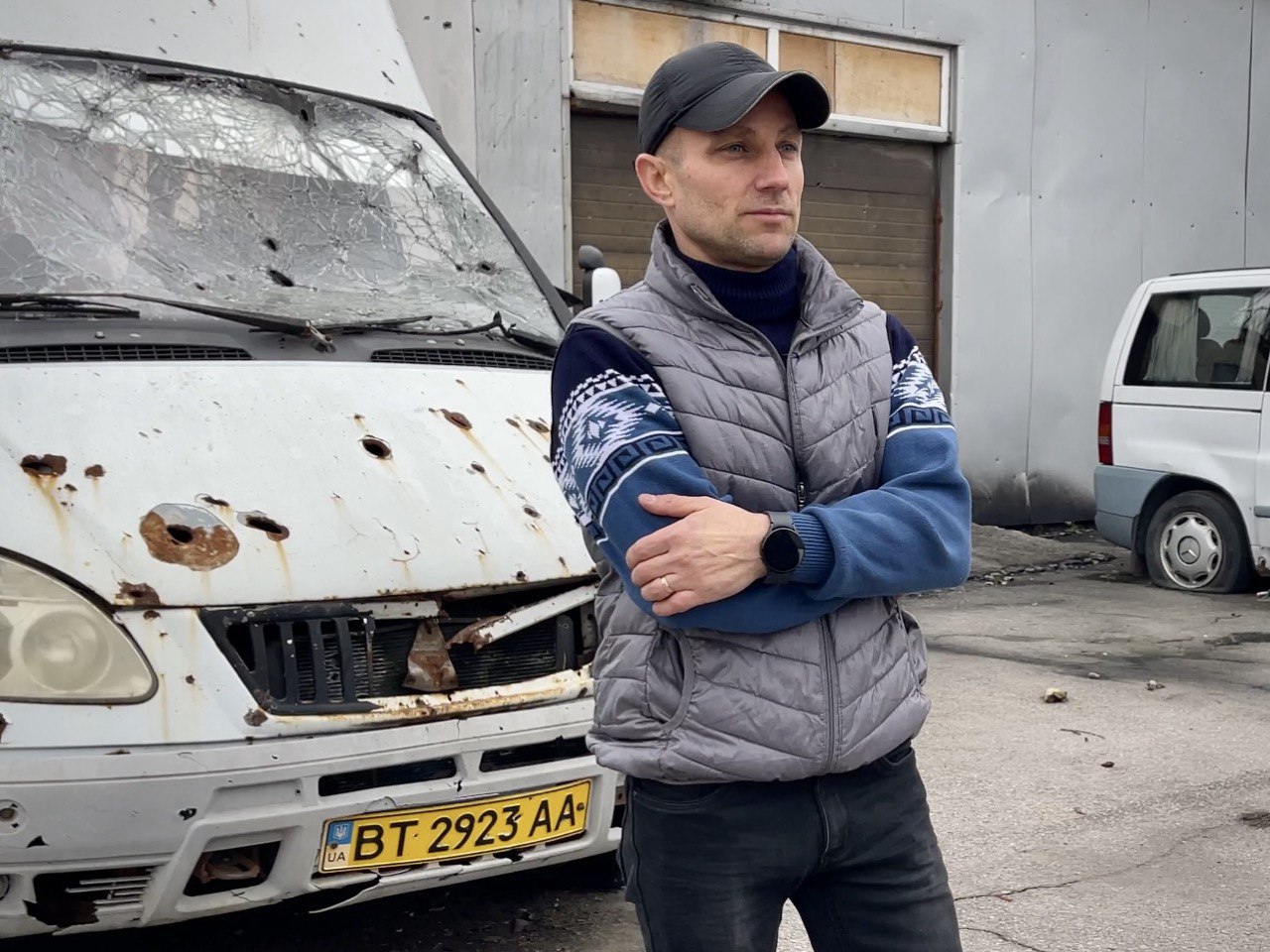
Pastor Valentin from Kherson
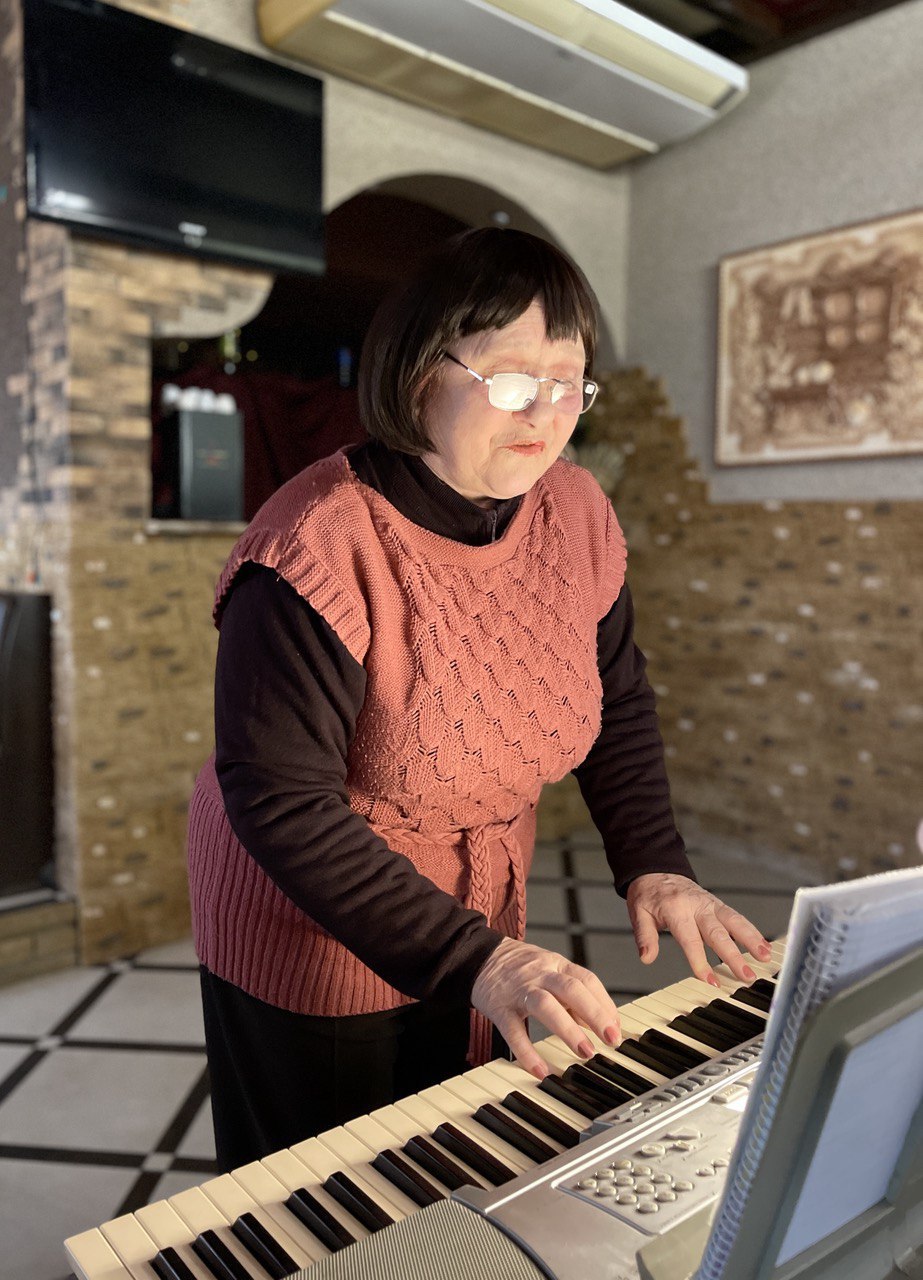
Sister Ludmilla
In Myrgorod, we have another new congregation. It is led by Pastor Andrey Pavelnikov, who previously had a congregation in Bakhmut. The church was damaged already in the fall of 2022. Six months later, Bakhmut was taken by Prigozhin’s Wagner forces after months of bloodshed. The city is now essentially reduced to rubble. The pastor has now started this new congregation in Myrgorod instead. It is growing, and they now need to hold two services.
Another place we visited was Izium. It is located in a recently recaptured area between Kharkiv and the front line, not far from the well-known Andiivka. The traces of war are clearly visible here. When we visited the city last year, we decided to start a congregation there. Two weeks later, the work began. It was so moving to see people gather for Sunday service. Pastor Igor from Kharkiv is very caring toward the people. A sister, Ludmilla, played the keyboard and sang, while tears streamed down the faces of the worshippers. Words of comfort, hope, and the gospel strengthened those attending. After the service, tea and coffee were served along with heartfelt conversations. One woman shared that several of them live in the same building on the other side of town. They didn’t even greet each other before, but now they have become close friends.
The conversations were heartfelt and somewhat exuberant. But then suddenly, a nerve was touched. Sister Ludmilla shared how seven of her close relatives were shot while trying to flee—among them a pregnant woman and her child. Four of the seven died. She herself had fled from Kupiansk with the entire congregation. Now she has decided to move to the newly started congregation in Izium to take care of the people there.
We are now planning for further pioneering congregation work. For this, we need workers who can move there and resources so that they can carry out their work.
Straight out of trauma and sorrow, these precious brothers and sisters manage to mobilize a willingness to serve the Lord and minister to their people. They are the heroes of our time. In simplicity and with great dedication, they make a significant difference.
Paul writes to the church in Rome: “I urge you, brothers and sisters, by our Lord Jesus Christ and by the love of the Spirit, to join me in my struggle by praying to God for me” (Romans 15:30). We can fight alongside our Ukrainian brothers and sisters in faith by praying for them. Let us pray for all the Bible school students, the future harvest workers, and for the new congregations.