


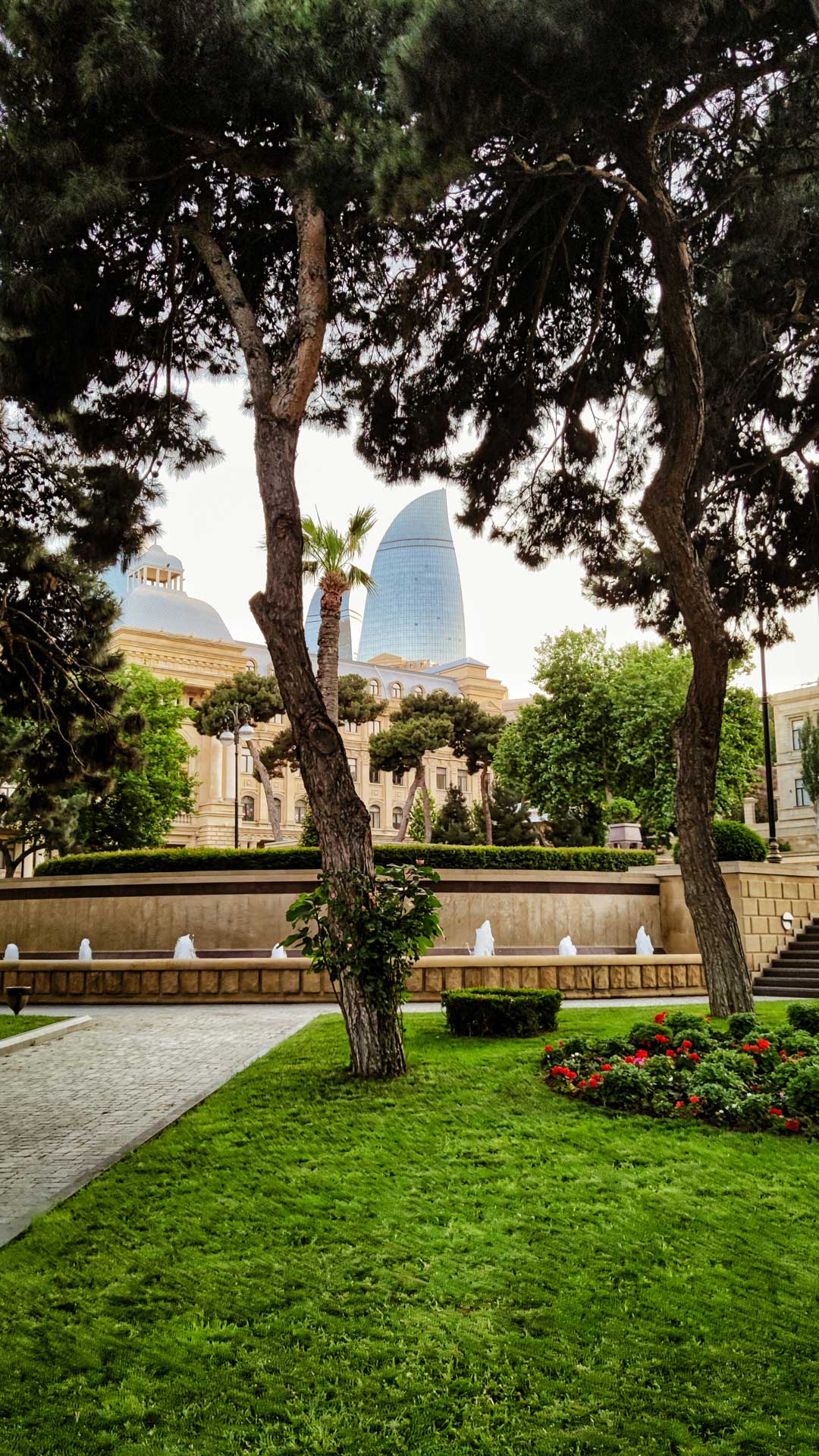
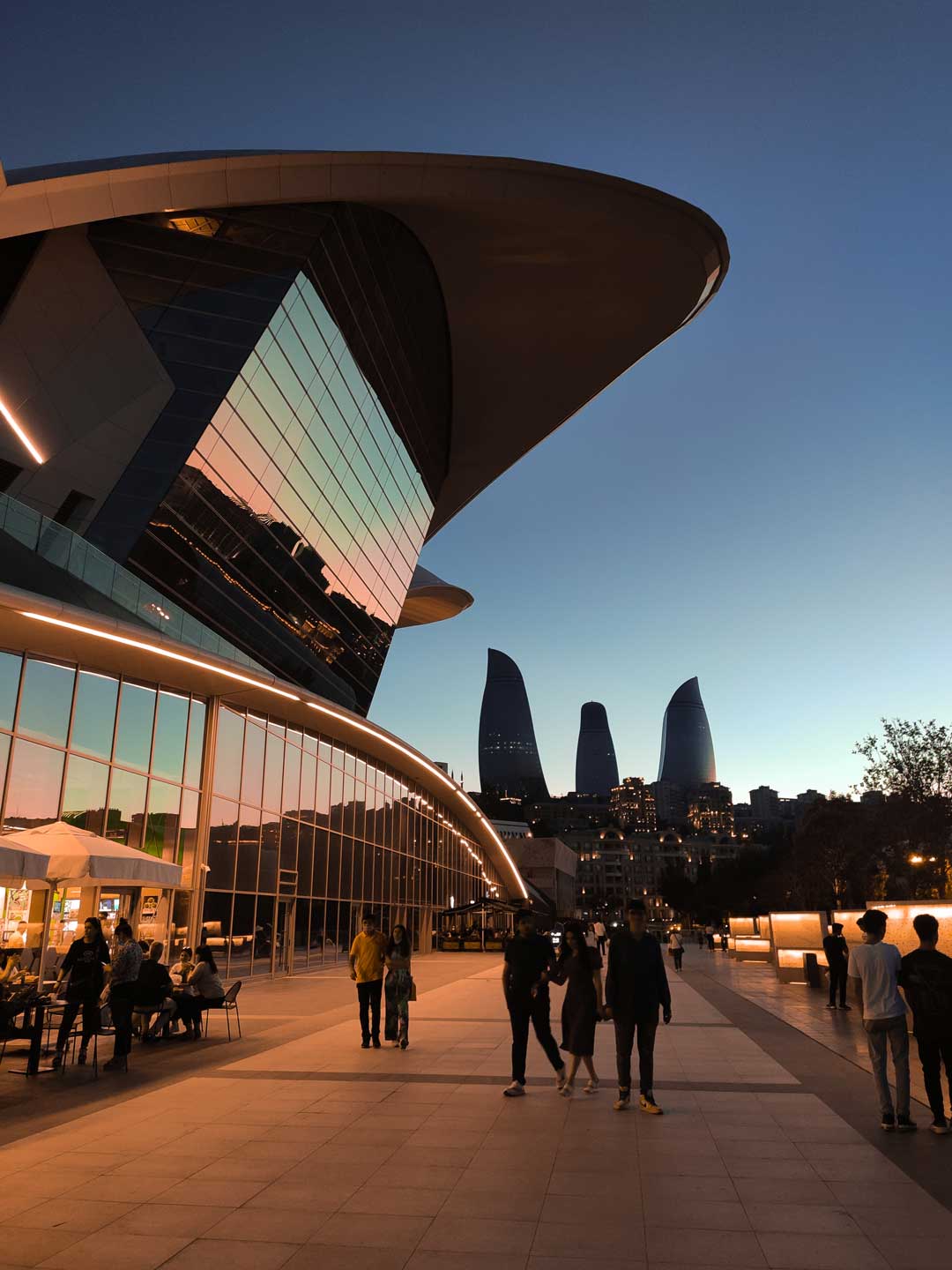
I recently visited Baku in Azerbaijan. It is always a great pleasure to visit this special place. The contrasts with the Baku we arrived in 1994 could hardly be greater. Back then, Baku was decaying. There were traces of prosperity from the heyday of the Nobel oil boom in the late 19th century until shortly after the Russian Revolution when Azerbaijan was incorporated into the Soviet Union. Soviet stagnation plus a war with neighboring Armenia had taken a toll on the city. Baku was gray. The seafront was dilapidated and parts had fallen into the Caspian Sea. At night it was dark and Baku was almost a ghost town.
Now, almost 30 years later, we are driving in a car on the long, wide boulevard along the now spectacularly beautiful promenade. On both sides there are concrete blocks with fences erected. A week later, it’s time for the Formula 1 race. As we drive, the cars reach speeds of well over 300 km/h rushing towards a skyline of modern skyscrapers.
The oil that Nobel began extracting is the secret behind this transformation.
Located where West meets East, Azerbaijan is a melting pot of culture and history. The city is at least 5500 years old and possibly the site of the martyrdom of the Apostle Bartholomew. The country’s name actually means ‘land of sacred fire’, which comes from a visit by the Persian philosopher Zarathustra, who saw the ground burning. The secret of the fire was not supernatural but natural gas that actually still leaks out of the ground and burns like an eternal fire. Baku is called the city of winds. The strongest winds I ever experienced were precisely in Baku.
Not very far-fetched, I easily link these metaphors to what we have experienced in the country. It started with a campaign in 1994, meeting the president and visiting refugee camps that housed some of the country’s one million refugees. Our team consisted of Swedes, Estonians and Ukrainians. The Holy Spirit, who is both wind and fire, was tangibly present in this pioneering step. We gathered 4000 people, mostly Muslims, in an indoor stadium. The spiritual hunger we encountered was overwhelmingly strong. Crowds invited Jesus into their lives and we saw many miracles. The deaf heard, the mute spoke and the lame walked. During a follow-up meeting, three children walked for the first time in their lives.
In fact, I heard a testimony very recently during a visit to eastern Ukraine, when the pastor in Kharkiv was on the team in 1994. He told me that Larissa, from their team, was asked to come and pray for a man in a wheelchair. She bowed before him and said “Say, Jesus is Lord”. He repeated her words. There was a complete uproar and she was worried that the man’s Muslim relatives had been offended and upset. “He can speak, he can speak!” they shouted. It turned out that the man was mute and the first words he uttered were “Jesus is Lord!” Amazing. She then prayed for him and he got out of the wheelchair. Absolutely spectacular! Even a woman got out of a wheelchair and was even able to run with Carl-Gustaf Severin.
Since then, a long line of missionaries has worked to build a church, Bible school and extensive social work. A number of other churches have been started in other places. These years have seen many struggles and victories. Today the church is well established. They have a good church building that can be expanded to double the seating capacity.
My last visit coincided with Easter. The church was packed and the service lasted over three hours, filled with a variety of elements. The authorities were also represented and offered their greetings. It was fascinating to hear them say “You have to work hard now. We don’t want to be a Muslim country. We want to be a country where Muslims, Jews and Christians can live side by side. But we need at least 10% Christians!” They are actually coming to visit Uppsala this fall too.
Next year, we will be celebrating our 30th anniversary. We look forward to it. At the same time, it highlights the importance of working with the young generation. It was therefore gratifying to hear that two weeks before my visit, God’s spirit had struck extremely strongly, as the leader of our youth work in Uppsala, Kenofi Terfa, led a youth conference there. It is so very important that the work is passed on to the young, not least in such a unique congregation as this, in a Muslim country.
Grateful for what has been achieved over the years, we look to the future. The parish’s new pastor, Yussif, is a warm and wonderful brother. It will be exciting to follow the development going forward.